5/20/2008

Workspace and Environment: Realicide

I'm Back in Chicago and it feels good! This tour was sickening, both in the slang driven 'neat' way and the literal pray-for-death way. There are too many thanks to dish out so I simply won't. Now it's time to beg for work in the hotdog city. Freelance for life!
In more interesting news and probably the sole reason you come here is: Workspace and Environment! The fine gentlemen of Realicide somehow got these amazing answers to me while in the midst of their U.S. summer tour. Come and read a extensive interview with Mavis Concave, Robert Inhuman and Vankmen of Realicide!


How long have you been involved with making music?
Robert Inhuman: I started really primitive programming and tape collage work in my teens, but it wasn't until I was out of high school that I started working in bands. I became interested in creating music for its slightly more immediate process and effects versus what I'd focused on prior, drawing and painting. I have stuck with it because it is most closely related to a socially acceptable catalyst for physical public interaction; live shows and the dialogue that is attached to them. I've stuck with music and bands because it is still a lingering platform for ideas, especially in "underground" culture, for now at least.

Vankmen: I have been involved with Realicide for a few years. It went from collabing on releases to from performing with the band, collabing live, and contributing beats for material.

Mavis Concave: I've been officially writing music for ten years now. I started when I was about 13 or 14 years old with a primitive IBM desktop computer and a general MIDI program. I would program entire instrumental songs and pretend I had a band with some friends at school who played guitar and bass. When I was 15 years old, I accidentally saw the band Mr. Bungle live. I went to see Incubus, Puya, and System of A Down because at the time I was way into that whole nu-metal thing or whatever. But that concert changed my life. Mr. Bungle was the first band to radically change my view of listening to and creating music. Within a year of seeing them live, I had discovered endless new music that I really enjoyed... not just the bullshit my friends enjoyed, therefore I enjoyed by default. Also within that year, I wrote and record about four or five collections of solo music on four track tape machines and computers.
I stayed motivated throughout high school because I went to an arts school. I majored in instrumental music, trumpet, but was heavily involved in the composition and jazz departments. I was very fortunate to have teachers supporting my growing interest in composition. I ended up going to college for music composition with the intentions of writing film soundtracks. After a year of officially being in the music conservatory, I dropped out of that program and designed my own liberal arts degree in audio engineering and related media. This is where I really started to become heavily involved with electronic music production such as digital hardcore, gabber, speedcore, harsh noise, etc. Although I felt rejected by most of my peers in college, I was again very fortunate to have professors and mentors supporting the direction I was heading in music and in life.
My main motivation now is mixed. I truly love making music as an art form, I always have. But I also feel a calling to communicate to people on an individual level. Although music is the same message broadcast to a large population at once, it is the individual listener who initially choses to receive and interpret the message, thus resulting in and individual interaction. I have a responsibility to communicate messages that will instigate positive change for individuals, even if that change is a temporary or small one.

What is the name you work under and where can we find your work?
Robert: I tour with Realicide and you can find it at www.realicide.com or any number of places that distro / feature abrasive contemporary hardcore music. But above anything online, you can find it face to face in as many cities as we can get to.

Mavis: I work under my own name as well as DJ THUMPER!, which is my project based in popular music breakcore, gabber, cut-ups. Generally, I always have tracks on the usual channels such as MySpace and Soundclick but lately everything is outdated as much new solo material is long overdue to come out. In the near future, I hope to start a video blog about experiments with hardware and software music production and performance.

Vankmen: Vankmen - www.myspace.com/vankmen

What is your current favorite piece of hardware?
Mavis: Since Spring of 2006, I've been consistently using the first edition Korg Electribe ES-1 sampler as my main hardware drum machine. If you aren't familiar with it, most people just call it "the green Electribe" and that usually clears things up. This is the first sampling drum machine I ever bought and it has remained the best piece for my style. I really enjoy the simplicity and obvious limitations of the machine because it forces me to be creative with my hardware setups and performance tricks. For example, the ES-1 only allows you to store up to 100 mono samples with a total of 90 seconds sample time. I have to carefully pick and choose what samples to store in the machine so I can efficiently perform old songs as well as have breathing room to create new songs. I like the hands-on interface with lots of real-time knobs and step sequencing, but also the advanced meticulous editing that can happen after your ideas are put down. I also love that you can store several different complete memory sets on Smart Media cards. I can fill up the entire machine with samples, patterns, and songs... then back everything up as one file on the memory card. I can then create a completely different set of samples, patterns, and songs, back all that up, and switch between the two sets. This is really great if you are in multiple projects that have contrasting music styles. I own two of these machines now, both of which I'm working into my live rig for Realicide's upcoming US tour dates this Summer/Fall. One machine will be loaded with only breakbeat kits and the other will be loaded with gabber and hardcore kicks, snares, cymbals, and synth tones.

Vankmen: Circuit bent DR-550... When used as a sound module, it's great for really harsh gabber like drums and noises.

Robert: I mainly use a microphone, but sometimes not even that, honestly. Speaking for the group as a whole, I'd say we've benefited overall the most from the Korg ES-1, sampling drum machine, because of its affordability and easy adherence to live manipulation.

What is your current favorite software or plugin? What makes this your favorite?
Mavis: My favorite piece of software, pretty much the only real software I use these days, is Ableton Live. It's a fully recordable digital audio workstation (DAW) as well as an excellent live performance tool. Similar to the Korg ES-1 sampler, I can put my ideas down quickly and accurately and then go tweak all the fine details later. I use Ableton Live to record, mix, and produce all of my tracks now. I really enjoy that it consists of one window workspace with the only pop-ups being VST plugins. I also use this program to perform as DJ THUMPER! in conjunction with one or two simple MIDI controllers. Triggering loops and rearranging music on the fly is so easy and natural. Don't take it from me though... There are so many other people who say everything I just mentioned and more. I'm just another supporter of the program. Research it.
As far as software plugins, I really dig the distortion VST made by Shuriken called "Berrtill". Most importantly, it's freeware... quality freeware. The distortion is modeled after circuit bent electronics and it hits the nail on th head. Fuzzes, glitches, overdrives, bit reductions, ring mods... Check it out. I much prefer hardware synths over plugins but the ArcDev Mainliner X2 is a pretty hardcore mono bass synth in VST form. I highly recommend it if you dig rave synths and lots of modulation capabilities. And again, it's good quality freeware.

Robert: I mainly stick with CoolEditPro, again because of familiarity and a fast easy process of collaging digitally. But again, for the group overall, I think Ableton Live is currently the most beneficial software.

Vankmen: I love Reason 3.0. It's just quick to get ideas down and the multiple ways of routing devices is great.

How does your physical space and surroundings influence your workflow?
Robert: For me, not a lot because I have had to make due with very little in terms of comfort and convenience, especially when I do not have a home, or am usually in a very temporary home. It is somehow not uncommon for my workspace to be the floor in the corner of someone else's room, or someone else's studio space just for a day or two... But I think for the other members of the band, the nature of their space affects their productivity and focus much more. I have just had to learn to cope with very limited resources.

Mavis: Where ever I live is generally where I work and it has a huge impact on my workflow. A few months ago, I lived in a pretty nice, cozy house in southwest Cincinnati, right on the Ohio River. I moved in thinking I would be super productive with my small studio setup on the second floor and no neighbors that would complain about high volume music all day and night. Something about that house prevented me from completing over half the tracks I started recording while living there. Now I live across town in a smaller apartment with less roommates and more neighbors. I work on music of some kind everyday.
I need to have enough physical space for my gear and be surrounded by people who encourage the work that I am doing. I can't be surrounded by people who write off my music production as a nuisance to have in the household. That is probably the biggest creativity/productivity block there is for me.

Are you involved in any music/sound work outside of your own projects?
Mavis: I would very much like to be a sound designer for a hardware based company, such as Korg, Roland, or Yamaha. I'm interested in designing the architecture of the sounds in drum machines and synthesizers as a profession. Who knows if it will ever happen, kind of a dream job I guess.
Other than that, I casually offer independent audio engineering services to anyone interested. From recording, mixing, producing complete tracks to simple MIDI programming or adding electronic elements to music to composing film soundtracks. I'm available, rates are negotiable, and I won't compromise the client's vision for the project, they get the final say. The more I work shitty day jobs to pay bills, the more I want to push this kind of audio work harder and make a living.

What was the first piece of hardware you remember obtaining? The last?
Robert: Tascam 414 Portastudio; my first 4-track tape recorder; it went through a lot and I remember it being a serious investment when I was in high school. The most recent is probably the Korg ES-1 I'm borrowing from Kyle Parker (Infinite Body) with Mavis's patterns loaded onto it to use during times he's not around this year.

Mavis: The first piece of hardware I ever bought for electronic music was a Boss SP-303 Dr Sample. I got it for dropping electronic beats on intros and bridges of Realicide songs during live shows with a drummer in 2002. After we parted ways with the drummer, I bought my first drum machine, the Alesis SR-16. I used the SP-303 and SR-16 is nearly every Realicide show I was a part of from 2003-2006.
The last piece of hardware I obtained was a Korg Electribe EA-1 analog modeling synthesizer... AKA "the blue Electribe". I picked up this machine for experimenting with using external effects pedals as oscillators after seeing Jon Prunty use one for the European tour Realicide did in Spring 2008. This is the second time I've owned this machine, which is really rare for me. I just wasn't ready for it the first time I owned one.

Vankmen: The first piece I ever got was my Boss DR-550. It's been used in the performances with Realicide on the westcoast last year and is in several upcoming recorded tracks with Realicide.

What is on your current 'wish list' for new hardware or software?
Mavis: I would very much like to buy a Korg R3 for my main hardware synthesizer. I've been looking into it a lot and saving up my money by selling large amounts of other gear. Bills keep piling up and other priorities prevent me from getting one right now. I really look forward to getting one though.

Robert: I'd want to get a great PA that we can take anywhere, so that we never have to deal with sound guys EVER again. That would be great... Otherwise, I really need to get a working laptop cos it's been hard to stay in constant communication in LA without my own source of internet or a space to work in regularly.

Do you have a mobile studio setup?
Robert: Everything about my life is mobile this year. I have my car which contains all my stuff. None of that is studio gear though, I just mean boxes of books and records + a few clothes.

Do you have a setup for live performances?
Vankmen: the setup I used for the Realicide performances is the Boss SP-505, Boss DR-550 (circuit bent), and various circuit bent guitar pedals.

Mavis: My setup for live gigs varies over time. The last live setup I had in Realicide consisted of two Korg ES-1s for drums and blasts, a Boss SP-505 sampler for synth/guitar loops/riffs, a few effects pedals for feedback, and a Behringer mixer.

Robert: My mouth. I have to run drum machines and tapes this summer when I'm in between bandmates, but it is a last resort. I normally don't touch anything at shows besides a mic and people.

Background
Robert: I am from Cincinnati, but now I'm basically nomadic between there, Los Angeles, Saint Louis, New Orleans, everywhere... I had some great times struggling in Ohio, but ultimately got done studying the dead end it is for the kind of work I am interested in pursuing.

Mavis: I was born and raised in Cincinnati, Ohio. I went to college about 100 miles northeast in Columbus, Ohio. That's the only other city I've lived in at this point, something I'm not proud of. Post-college now, I live in Cincinnati again, temporarily. I'm planning on leaving Ohio at the end of 2008 to move East, possibly Pittsburgh or Philadelphia. I haven't made solid arrangements yet but I'm looking forward to the change in location.

Have you ever heard your music being played at a random/public place?
Robert: All our shows feel like that to some degree, to me anyway.

Vankmen: One time I heard a DJ play my song off Teen Suicide 01 at a random party. That was pretty cool.


5/08/2008

Workspace and Environment: Mr. Projectile


Yo Yo Yo! One last gig in Amsterdam on Saturday the 11th, then it's home back to Chicago! But before any of that happens, here is Mr. Projectile!

Matthew Arnold of Mr. Projectile

Background
I was born in NY,NY and through a long series of twists and turns throughout my 33 years i've landed in San Francisco at the moment. I've been making music since 1994... but I must say it wasn't very good music. My music probably didn't get good until around 1998. I had a few beginning motivating factors. I first heard proper electronic music in 1992 on a radio show called Depth Probe in Minneapolis. The feeling I got instantly was: what had I been missing out on? So a huge contributing factor in the beginnig was me wanting to be a contributing factor to the electronic music world. I would say that it is still the huge motivating force behind why I love making electronic music.

What is your current favorite piece of hardware?
Nord Modular G2. I haven't found a synth that better suits the type of music that I do. The knob setup, the build quality and the software editor are the best that i've seen. I use the Nord a lot to do the things that i don't want to manually do, such as random sequenced bleeps and arpeggiations. The ability to improvise with it while performing is a huge thing also.

What is your current favorite software or plugin?
I'm pretty pumped on Guitar Rig these days. Everything on it just has this smoother more round sound than anything else. I keep finding myself going back to those plug-ins more than anything else.

How does your physical space and surroundings influence your workflow?
At the moment I think I have one of the smallest rooms in San Francisco. It's pretty cramped, but I think the upside to that is that I only have to swivel maybe a foot to reach everything I need which over the years i've found increases my workflow... when I'm not having to move around too much to get to things.

Are you involved in any sound work outside of your music?
Does playing Super Mario Galaxy count?

What was the first piece of hardware you remember obtaining?
Technics KN-2000, for those who want to laugh... look it up on youtube. I recently built a x0x b0x which i'm farily in love with now.

What is on your current 'wish list' for new hardware or software?
Call me crazy but I want my mc-303 back. That thing was so simple. Also after looking at Richard Lainhart's site, I now want a Buchla 200e pretty bad.

Do you have a mobile studio setup?
My current studio is my mobile setup. Macbook Pro, Firewire 410, Machinedrum Sps-1, x0x b0x, and a Nord Modular G2.

Do you have a setup for live performances?
I am currently using my whole studio for live perfromances. I'm having a lot of fun playing the bulk of the songs out of the computer and then using the gear to sort of improvise over the songs. It's also nice to know that anything I do at home can instantly go on the road as well.

How many physical locations have you had your studio setup in over time and how have they changed?
Savage MN, St. Paul MN, Minneapolis MN in three separate places, Santa Fe NM in two separate places, Missoula MT in two separate places, Santa Cruz CA, and two separate places in San Francisco.

Have you ever heard your music being played at a random/public place?
I have had friends play my songs while at various events which is always a nice gesture. I once heard one of the Skam DJ's play a song of mine while opening for Autechre.

Find his stuff at:
junodownload.com/semisexual
semisexual.addictech.com
myspace.com/misterprojectile

5/06/2008

visual_Output: Totally Wired

I found a message in my e-mail saying that I might be interested and yes I am! There are too many worthwhile things to list from the video that if I'd be describing every single frame. So instead of that, press play...

You might be interested in the trailer for my forthcoming documentary called 'Totally Wired', which is about Andreas Schneider and his infamous analogue store in Berlin, Germany, called 'Schneider's Buero'. The doc explores the relationship between the boutique builders and gear- lusty musicians who make Schneider's Buero an interface in its own right. Doc features some heavy inventors like Wowa Cwejmann, Dieter Doepfer and Ken Maccbeth as well as musicians like Ricardo Villalobos, Daniel Miller and Junior Boys.

Niamh Ahern
Director, 'Totally Wired'


Trailer for 'Totally Wired' from Niamh Ahern on Vimeo.

4/30/2008

Workspace and Environment: The Locust


For a good portion of the year The Locust are on on the road and when they're not melting faces, the members are spread out across seven hundred twenty six bands and forty eight record labels. Justin Pearson, the bassist, graciously gave some time out of his lax schedule to do a quick interview and share some pictures. Enjoy!

Justin Pearson of The Locust

Background
i was born in chicago and currently reside in san diego. i started "officially" making music/ sound about 17 years ago. i suppose what got me motivated was the obvious interest in music, bands, and the culture that was attached to certain genres of music and art. i use my legal name, justin pearson. ive been or are still part of the following bands: the locust, some girls, holy molar, head wound city, swing kids, crimson curse, ground unicorn horn, swing kids, struggle.

What is your current favorite piece of hardware?
im not sure what you mean by hardware. usually that word when in musical context is attached to a drum kit's hardware. i do play drums but im not that stoked on my set to where id have a favorite piece. so ill take this and apply it to my bass set up. and easily say that its my ampeg dan armstrong prototype bass. its a fav for the obvious. its what i use to create music. sure effects, amps and so on all help in creating sounds but its the bass that i use my hands with, and it has to fit in so many ways. its like a snipers favorite gun, a race car drivers favorite car, a dogs favorite ball.

What is your current favorite software or plugin?
i dont personally use software.

How does your physical space and surroundings influence your workflow?
i have worked in some of the most impractical rehearsal studios. either due to little physical space, or filthy slum lord style, or a bedroom. i do feel that i can write in any place as long as there is a good connection with whom im playing with. but the nicer and more practical the rehearsal space, im sure the easier it is to write. i guess i just have low standards.

Are you involved in any sound work like films or sound design?
no. i wish i was though.

What was the first piece of hardware you remember obtaining? The last?
first was when my moms cousin loaned me a gibson les paul when i was twelve. that was what actually planted the seed of creating music in my mind. last, is something by trogotronic. dont know the name of it as it was a one of a kind pedal.

What is on your current 'wish list'?
honestly, im pretty into what i have. but again, im intrigued by the stuff that nelson from trogotronic makes. the stuff he uses in bastard noise and geronimo is amazing. so if i had the money and time, id submerge myself into his realm of sound.

Do you have a setup for live performances?
all the gear i use is used for live performances. this would include 2 ampeg dan armstrong bass guitars, two ampeg svt bass heads, a 2 x 15" speaker cab, and a slew of effects pedals.

How many physical locations have you had your studio?
im not quite sure. for some of the projects i was involved in i was just doing vocals so i had little to nothing with me. but as far as my bass set up, its traveled to many places over the years. i suppose they became a bit better over the years. or maybe not better but more specific to what i was doing and what i needed a studio for.

You can find some of Justin Pearson's projects here:
myspace.com/thelocust
myspace.com/headwoundcity
myspace.com/holymolar
myspace.com/groundunicornhorn


4/29/2008

Access Virus TI - Software Public Beta 2.7

Just released today by Access, the version 2.7 Public Beta of the Virus TI Software which now includes:

- The Atomizer (Glitch/Beat chop effect, controllable via keyboard)

- Extra USB output, bringing the total USB outputs to three. (Using this removes the ability to use the TI as an audio interface)

- Support for multiple Virus TIs on one system!

Coming to future Beta/Release versions: USB Audio Input and Virus Control Center software which will let you overwrite ROM banks, make backups, and install OS versions.

Image via Flikr/Matrixsynth, original here.

On a side note, I have been a long time Virus user starting with the Virus A then the B (Indigo 1) and I've just picked up the Virus TI Polar. I can defiantly say that the integrated/plugin aspect of the TI system has really increased my productivity and my work flow. It really does work just like any normal plugin with the added benefit of having the full hardware right in front of you and total patch recall on song load. On previous versions of the Virus, I was mainly using it in single voice mode and recording each part into the computer. Now I take full advantage of using the multitimbral capabilities as well as the various output configurations. My typical setup has the main analog outputs of the Virus normalled to a DBX386 tube preamp while having the two (now three!) USB outputs running parallel to this in coming from the plugin in Logic.

Also, I've got two tracks made primarily with the virus TI streaming here: polyfuse.net if anyone is interested in hearing the sound of the TI.

4/28/2008

GRIND...

I'll be playing a one off show tomorrow tonight in Paris, France opening up for Rotator and Krumble. Usually these promoters have insane artwork for their flyers. Last year they came up with some real brutality and accurately visualizes how that night sounded: peep. This year they made the flyers before I confirmed and got them printed sans my name, so after taking some cue's from Donnie Hoyle I made my own modest version. Come out and say 'bonsoir' and I'll hand you a little satanic sticker. Details Here.
You can find what you're getting yourself into: Rotator, Krumble, Surachai.

Oh and on a totally related note, I ran into Mike Brown of Liverwire Synthesizers' blog and found a remnant of NAMM. Mike took this picture when Richard, Justin and I tried to pry ourselves from conversation to get food. The second one is a full on shot of what he brought out. Those AFG's should be reaching people relatively soon. And DAMN, I need that Chaos Computer. Oh the things I would do to you......


4/26/2008

Ambient...


I'm playing a secret ambient show in Chicago tonight with minimal gear, Virus TI + Waterphone.

4/25/2008

Workspace and Environment: Michael Fakesch


Holy F! This interview has been collecting dust for more than six months and only last night did I realize that this has been in draft form since October. Don't worry, it's been worth the wait! I mean, you waited for this right?

Background
I was born in Rosenheim and I still live there mainly for my wife and kid. I started doing music in 1992, 1995 my first records came out, since 1998 I am a professional musician. I work under the name Michael Fakesch (which is my civil name). My former band was Funkstörung which I did for 10 years together with Chris De Luca (we split up in 2006). I used to have a studio (actually just a 808, 707, 303, a effect and a mixer) together with Chris at his home, then after selling all hardware and buying a computer we worked in the basement at his parent's house. 5 years ago we rented a nice space in the heart of Rosenheim, still only using a computer and no hardware. Almost 3 years ago, Chris moved to Berlin and I stayed in the Rosenheim studio, buying more and more equipment...now it looks like a studio once again!

What is your current favorite piece of hardware?
My favourite toy is a brandnew Acidlab Bassline. It's a on-the-fly-programmable 303 clone, which was build by a old schoolfriend of mine (www.acidlab.de) it sounds like the original, looks cool, is cheap and the super intuitive programming is much better than on the original.

What is your current favorite software?
My favourite software is Cubase4 and Ableton Live....not suprising, isn't it? ;-) the audio editing in Cubase is just super great...love it! ableton has fantastic effects (like the warp-timestretcher and the beatrepeat) and it's just the best tool for jamming and playing live

How does your physical space and surroundings influence your workflow? I am living and working in a small Bavarian town near Munich called Rosenheim. It's boring, but has beautiful surroundings like the alps, forests and nice lakes. I got a kid and wife and I really enjoy my family life there...this keeps my feet on the ground and my concentration focused on my own music. the room itself doesnt effect the way I work...when i talk about my studio I mainly mean my computer...I am like being in a virtual space. every new software, every new hardware effects my sound,...at least for one song. I like trying out new tools, playing around with them... they are always inspiring.

Are you involved in any music/sound work outside of your own projects?
Since about 2 years I am doing loads of sound design and music for TV-Ads (like Toyota, BMW, Napster, Verizon, MTV, Tesco Mobile, Disney Channel). I also started doing soundtracks for films.

What was the first piece of hardware you remember obtaining?
A Roland TR 808! There were times where we couldn't live without switching on the 808 every day ;-)...but then we sold it, cause we needed the money for a computer and were kinda fed up with the 808 sound (we got infected by the digital world ;-)). At the moment I am really thinking of buying a 808 again...it's just beautiful and the sound never gets outta fashion.

What is on your current wish list?
A new Mac Pro with cinema displays...just waiting for the new model-line!

Do you have a mobile studio setup?
I got a macbook with cubase4 installed...don't need more!

Do you have a setup for live performances?
My kinda basic livesetup contains: a macbook, 3 Faderfox controllers, a M-Audio soundcard, an Acidlab Bassline, a Behringer mixer, 2 Kaosspads, an Electribe mx, a MPC1000 and a Yamaha DX200.

You can find Michael Fakesch here:michaelfakesch.com

4/24/2008

Rob Acid: Mastering Tips!


Via matrixsynth.

Guitar Pedal Demo Resource

Pro Guitar Shop Youtube
Here is something I've been searching for and think is a valuable resource when it comes to pedals. Without too much backstory, a few years ago I worked at a music shop in Maryland called Atomic Music. They employed mostly guitar buffs and I watched them talk their alien language while helping people with keyboards and recording. Since then I have been obsessive about delays and various high end/interesting pedals. I found a youtube account that has demos an array of interesting pedals that are worth checking out. As of this posting they have 150 videos ready to rock your bank account.
Props to whoever knows what pedal on the left is.

4/23/2008

Workspace and Environment: Contriva

If anyone knows how to get into the Paris Catacombs from an alternative entrance, please drop an e-mail to trash@thedeepelement.com. They are officially closed so I am looking for an unofficial way in. Uh, with that out of the way, here is Max Ehwald of Contriva!

Max Ehwald of Contriva
How long have you been involved with making music/sound?
I'm in my first band Contriva for more than 10 years now.

What is the name you work under and where can we find your work?
So far I have no solo project. I play in Contriva, jersey, saroos and, as a live musician, in the Notwist. If I'm working on my own, it's mainly about composing (almost always using a guitar) or editing and arranging some band recordings. I have never really produced a piece of music all alone.

What is your current favorite piece of hardware?
It may sound silly but it's the Ibanez DE-7. I use this obviously crappy pedal since they threw it on the market, but, due to its bad mechanical quality, had to buy a new on several times. I just love the sound of the "echo mode" and the simple handling.

What is your current favorite software or plugin?
I don't use plugins so extensively right now. One that I used more often is the Arturia Arp 2600 V. It must be really well emulated, couse it sounds very lively as I think.
I normally use software as a recording tool. There's no really "favourite" sequencing/recording software for me, I use emagic Logic like many others, only because of compatibility with other musicians. I'll have to use pro tools now, for the same reason...

How does your physical space and surroundings influence your workflow?
I always try to go to a place that is not usual or not so familiar to me when recording new ideas or composing, if I or the band has the time and capacity. so I very much like the idea of a mobile studio. Also, I tend to think it's good for an artist or a band that has already developed "an own style", to work with different people from album to album. but that's again no strict rule to me. I also like editing and arranging when on a train journey, especially in a dining car ;-)

Are you involved in any post production?
I have done two movie soundtracks so far: one together with Rike Schuberty of Contriva, for a short movie ("Die Babysitterin" by Christine Lang), the second for a documentation ("Generation Model" by Anne-Krisin Jahn) together with Florian Zimmer (jersey, saroos). I find working on music for film harder than just making music, but I hope I'll get more skilled in the future...

What was the first piece of hardware you remember obtaining?
A guitar (Framus Atlantic, a german model from the 60s)

What is on your current 'wish list' for new hardware or software?
I'd like to have a delay pedal where you can set the delay time digitally and reproducible and that still has an interesting sound...If you have an idea, please send me a mail...

Do you have a setup for live performances?
Different setups for different bands, but more or less usual guitar/bass player setups. nothing special...

Where were you born and how did you end up in the location you currently reside?
I was born and still live in Berlin, Germany.

How many physical locations have you had your studio setup?
As I don't own a studio setup myself, none ;-). the studio where we (contriva) recorded our last and other records (villa qrella) is also our practice room and the home base of masha qrella's solo work, and it always has been at the same place

Find them here: myspace.com/contriva

4/18/2008

Surachai Modular Loops

And because all that ass kissing makes me sick, I've made some samples to share with you. Paris + catacombs closed for repairs = alone time with the modular. Repairing catacombs. Is it me or does that sound like a paradox? Anywho. these files are raw, no normalization, no compression, no sweetning. Mono, 16 bit, 44.1 Khz. Enjoy! You can download them here.

From the zip file:
Because I'm in Paris and my audio interface is in Chicago, I decided to use the line in on the Macbook. While I never done this before, It seems to work pretty well.

Use these samples however you want. Though I'd love to hear how you're using them. You can send products, questions and comments to: trash@thedeepelement.com
Best,
-surachai.


The current modular tour setup is:
Livewire Dalek
Cwejman VM-1
Doepfer A-188-2 BBD
Doepfer A-142-3 Quad LFO
Doepfer A-155 Sequencer
Harvestman Malgorithm
Harvestman Polivoks VCF
Plan B Mixer

4/17/2008

Melodyne - Direct Note Access

I haven't been dazzled by a product in quite some time and usually on this blog we don't care about new products but rather how people use them. For a while now I've known that a few of my friends have been Melodyne users because mainly, they can't seem to shut up about how dope it is. But tonight, a friend sent a youtube video (he's one of the few people I actually click links from) that has finally proven to me that this product innovative, clearly exceptional and groundbreaking. Ok, so these three adjectives are really mundane but I swear Melodyne is more impressive than my vocabulary. Celemony Product Comparison Sheet


It's hard to comprehend that audio is now easily manageable as MIDI notes. Direct Note Access, or as the clever marketing team over at celemony call it: DNA, is opening a door I've always regarded as closed. I thought Logic's audio to MIDI function was impressive, but ate serious ass when it came to translating any audio file with more than one note. Melodyne's ability to decipher how many parts are playing, what frequency they're at and ability to edit them clearly blows my mind and defies everything I'm used to. I can't really see myself trying to fix guitar or vocal harmonies, rather trying DNA on really complex audio sources and see how it responds. Or testing it's limits, finding glitches and exploiting whatever characteristics this program has. I do have questions on how it reacts to effected sound sources, like distorted guitars, complex synth patches and the sound of Justin's voice.

It's nice to know that Justin and I don't have to do the dozens of takes on our barber shop project (mainly from my crying). Finally we can play our modular synths without tuning them (did I ever before?). And finally people who play Rock Band/Guitar Hero may actually sound good after using Melodyne (with alcohol...... and roofies). Although it is slated to be released in Fall 2008, if you buy the plug-in version 1 for $299 now, you'll get the upgrade to version 2, which includes DNA, free. Normally version 2 will be $399.

In other 'news', the tour starts up again in a couple of weeks. It has truly been a rollercoaster and I'm exhausted. I have a few gigs left, the next one is in Paris on the 29th of April, a few other random places, finishing up in Amsterdam then it's back to Chicago in May. I want to thank everyone involved and everyone that came out so far.

4/03/2008

audio_Output: Richard Devine - The Electronic Music Manuscript

Just released by Sony is the The Electronic Music Manuscript sound library, which happens to be a brilliantly thought out collection of sounds plus an 'above and beyond' style presentation that you don't often see as part of commercially released sound libraries. The two CD set comes bundled with a large number of photographs which highlight some of Richard's methods of mayhem, two videos showcasing the creative processes, a huge interview with Richard giving a more in depth look at his work and history, NI Battery kits and finally the 24bit WAV files...

I caught up with Richard this week for a quick interview about the release...


JM: It's great to see a library full of sounds that you can't exactly tie to a specific genre that come from a more experimental direction, what was your inspiration for the overall collection?

I wanted to make a library that would be useful for many different people. I was aiming for sound designers, composers working in Film/TV, radio, video games, and electronic music. I tried to create some really unique material that could be used in a loop format with ACID and Apple Loops, but also include single shot and Battery kits for those who want to program and manipulate the sounds on a more detailed level.

More ahead.

JM: People generally know your work from the electronic side of things, but I know you also use a lot of weird acoustic instruments and different types of microphones/pickups. Did any of that make it into the library?

I have recently been going out and doing tons of field recordings. I had Josh Kay who is a close friend of mine work with me on a lot of these recordings and sounds. We both used the Beyer Dynamic 930C stereo pair microphones for a lot of the outside ambiences and Foley objects. We also used the Rode NT4, AKG C-1000’s, DPA-4017’s Shotgun Microphones, Sony ECM-MS 5 and the Blue Dragon Fly microphone for the instruments here at the studio. We used the Sound Devices Mic Pre’s for all the outside location recording material. We recorded lots of strange instruments like the Water phones, Tibetan Singing Bowls, Talking Drums, Space Phones, Thunder Drums and Wooden Log Drums. We also recorded a small collection of Indian Pan Flutes, Bamboo Flutes, Ocarina’s and several Didgeridoo’s that I got in Australia. Some of favorite recordings came from the African Finger Pianos. We did a whole bunch of sessions doing prepared Finger Pianos. I have about 12 different ones that we recorded doing all sorts of strange stuff to. We would take a very John Cage approach to experimenting and getting new sounds out of these instruments. Sometime Hammering nails into the wood and using Magnets, Rubber Bands, Paper clips, wires, and small mechanical motors to play onto the metal tongs. You would be amazed at some of the variety of sounds we got. We did a 4-day recording session of my old Kurtzman grand piano, which was amazing. We placed the Water phone on top of the Piano Strings and played the water phone with a Violin bow, and let the metal bowel resonate into the chamber of the piano. It was a super creepy sound. All of these recordings made it into the final library. I was really happy with how this all turned out.

JM: While working with a company as large as Sony did they apply any limits to what you were able to create or did they let you design the library in the way that you wanted it?

The first person to contact me about doing the library was Richard Thomas who is one of the head directors of Audio at Sony Creative Software. We met at the 2007 NAMM show, and started talking about doing a library. Richard had mention to me that they had been interested in doing a library with me for a while. I was worried that it might be limited to a specific format or genre, but to my surprise they where completely open to what ever I was going to give to them. They had already done their homework and were keeping an eye on me for quite some time. They were familiar with my music, and the sound design work I have done for other companies. So it was a blessing that I was able to release this project with them without any limitations. They gave me total freedom over everything which is really amazing.

JM: The library actually comes with notes, photographs and even two videos. This is something I have never seen as part of a sound library, can you tell us a little more about this?

Yes, we wanted give more details about the project and how we recorded it. I almost felt like this was like releasing another record in a way. I love getting something that feels like you can get a glimpse of that artist life within a specific time period. I wanted extra linear notes, pictures, and videos so people could get an idea of how it all came together. To have some visual references that could be associated with the project. I think it is much more memorable then just having a bunch of folders with sounds on a DVD.

JM: Was there any specific or unusual sound design techniques that you used for any of the content in the library?

We used a lot of different techniques for this. We did lots of layering and combining of acoustic sounds with synthetic sounds. Like taking the sound of a train passing by and layering that with pitched down animal breathing sound, or layering the sound of a car driving over a bridge and layering that with the VCO of a Buchla 200e. Then sending them through a Eventide H-8000FW. We also used the Kyma System for lots of sound morphing and spectral FFT processing of sounds. I would run tons of field recordings through Kyma and get some really odd FM based modulated sound scapes, and beautiful granular bits. We used the Nord Modular G2 and Roland V-Synth GT for lots of Format and Elastic type sounds. A large portion of sounds where created using the Cwejman S1 and Doepfer Modular systems that we have here. We even used a handful of circuit bent machines like the Highly Liquid bent 707, and TR-808.

JM: As far as I know this is your first commercially released sound design library, are there plans for more in the future?

Yes, I have lots of cool things planned the future. I am hoping to get into making my own custom hardware sometime. I have lots of interesting concepts that I have been trying to realize into hardware. I have been talking to Mike Brown (Livewire Synthesizers) and working with many software companies developing new interesting sounds for other virtual plug-in packages. We are also trying to launch our own small boutique sound design company DevineSound. I want to launch some really crazy new libraries in the near future for users who have Kontakt and Battery.


'The Electronic Manuscript: A Richard Devine Collection' can be purchased and previewed here.


4/02/2008

Kammerl Audio Plugs

Greetings from Barcelona! Everything on this tour has been insane and the responses have been great! So thanks if you happened to come out. For the next few weeks I have some downtime and decided to go around the beaches asking if people want massages. Or more. Anyways, onto the reason I'm making a post....
Julius Kammerl just sent an e-mail informing me that he has just released his plug-ins to the public for the outrageous price of free. They have previously only been available for select artists including members of Funkstorung. I've been waiting (pestering him) for months for these to finally be released and even though I have tinkered around with them for about a day, I can say that they'll make it in the heavy rotation of plugs I'll use.
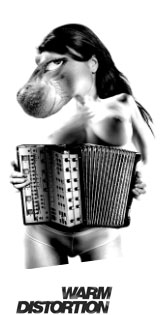
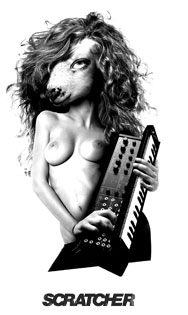
First and foremost I must compliment Klaus Kaske on his artwork for all the plugs. Anything that promotes some sort of bizarre bestiality is fair game in my book. There are five plugs and the names are extremely vague: The Slicer, The Scratcher, The Pitcher, The Looper, The Warm Distortion. Should you have questions about the functions of the plugs, there is a nifty readme that explains it in very basic and useful terms.
These plugs seem to be an intelligent, high quality and more functional reiteration of some of Live's already existing plugs. Strangely I'm drawn to The Warm distortion and The Pitcher because of it's subtle but extremely high attention to detail. The Pitcher exactly what it's supposed to do but opposed to some other pitch benders, this one sounds great! The Looper is an endless stream of inspiration and fun. Hearing the loops slowly circulate through the file can suck you in for hours. I can keep doing these one liners but just download the thing and make your own mind up.

"Michael Fakesch is going to release a dvd with music videos on K7. These plugins are also part of this dvd as a little extra feature. "

Click on the logo below to get to the goods....